
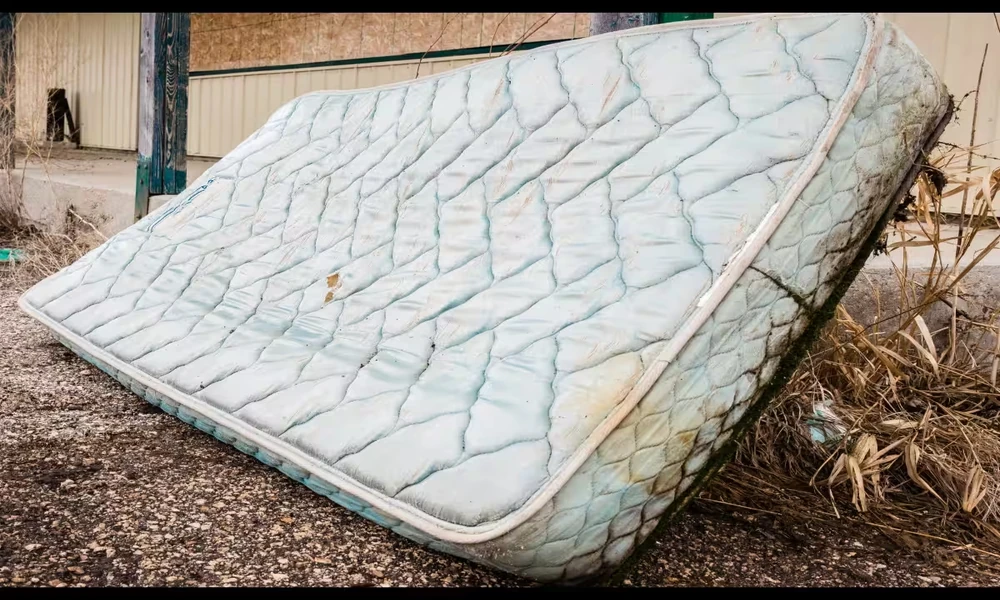
Overflowing landfills, a mounting environmental headache, and public frustration. Mattress disposal is quickly becoming one of the toughest challenges facing cities today. Each year, discarded mattresses pile up, straining municipal waste systems and raising urgent questions about sustainability, policy, and social responsibility.
The Escalating Mattress Disposal Challenge Faced by Municipalities
Mattresses are bulky, tricky to move, and designed to last. But once discarded, their durability becomes a problem. Across North America, cities are seeing a sharp increase in mattress waste, fueled by population growth, changing consumer habits, and the rise of fast furniture. The consequences? Collection headaches, illegal dumping, and landfill sites reaching their limits.
Not only do mattresses eat up valuable space, but their synthetic materials and embedded chemicals can leach into soil and groundwater, posing long-term environmental risks. Traditional waste management systems are often ill-equipped to handle these cumbersome items efficiently or sustainably.
Early Attempts and Shortcomings in Mattress Waste Management
While countries like Canada and the United States pride themselves on robust recycling programs, mattress disposal remains an outlier. There is still no unified, comprehensive policy for the ecological management of end-of-life mattresses and box springs. Most discarded mattresses either end up in landfills, where they can take up to 100 years to decompose, or are incinerated, which merely shifts the pollution problem from the ground to the air.
Even where recycling programs exist, many citizens are unaware of their options or see them as inconvenient compared to curbside disposal. Municipalities have also struggled to scale up solutions that can handle the sheer volume of mattress waste generated in larger cities.
Innovations in Mattress Recycling Technologies
Breakthroughs in recycling technology have begun to change the landscape. Innovative companies like Recyc-Matelas Canada have pioneered unique processes for dismantling mattresses, separating their components, and recovering valuable materials. Their approach goes far beyond conventional disposal, offering a truly sustainable alternative that prevents millions of mattresses from ever reaching a landfill.
What sets these new systems apart is their ability to process mattresses at scale. Using proprietary technologies, Recyc-Matelas can handle large volumes, sorting metal, wood, foam, and textiles for reuse in new products. This closed-loop solution not only reduces waste but creates new revenue streams and supports a circular economy.
Integration of Social Initiatives Within Recycling Programs
The environmental case for mattress recycling is clear, but the social benefits are equally compelling. Recyc-Matelas, for example, has integrated sustainable employment programs into its operations, providing full-time jobs for people with intellectual disabilities. By offering stable, meaningful work, the company supports community reintegration and improves quality of life for individuals who often face barriers to employment.
These dual outcomes, environmental and social, demonstrate how innovative recycling programs can serve as engines of inclusion and positive change, turning a waste problem into an opportunity for impact.
Expansion and Scaling of Mattress Recycling Solutions Worldwide
From its roots in Quebec, Recyc-Matelas has expanded across Ontario, France, and Belgium, now operating six subsidiaries. This international growth shows that scalable mattress recycling is not a distant dream but a proven reality. However, expansion brings new challenges, such as logistics in dense urban centers and the coordination required for collection and processing at municipal scale.
Collaborations between cities and recycling firms have proven essential. Municipalities that partner with specialized recyclers can tap into existing expertise and infrastructure, streamlining the transition from traditional disposal to circular, sustainable systems.
Policy Development and Regulatory Trends Moving Forward
As the crisis grows, so does political will for change. New frameworks are emerging to guide mattress waste management, from extended producer responsibility (EPR) policies to financial incentives for recycling adoption. Municipalities are being encouraged, sometimes required, to choose recycling over landfill or incineration.
Early adopters offer valuable lessons. Cities that embraced mattress recycling early on report significant reductions in landfill use, lower illegal dumping, and increased public satisfaction. These successes point the way forward for other regions grappling with the same issues.
Practical Steps Municipalities Can Take Today
How can local governments get ahead of the mattress disposal curve? Three priorities stand out:
– Public-Private Partnerships: Teaming up with established recyclers brings scale and expertise.
– Citizen Education: Clear communication about proper disposal and available services boosts participation and reduces illegal dumping.
– Infrastructure Investment: Funding collection points, transportation, and recycling facilities is essential for sustainable success.
Envisioning a Sustainable Future for Mattress Waste Management
The vision is clear: zero waste, circular economies, and an end to landfill-bound mattresses. New technologies, broader social programs, and forward-thinking policies are all within reach. Municipalities willing to take bold steps now will not only solve today’s disposal crisis but unlock long-term environmental and social gains, proving that what was once an eyesore can become a model for sustainable urban living.